Case study · Fintech
Simple Invest.
Self-serve investment capabilities, brought from Singapore to three new Southeast Asian markets.
The challenge
A product built for Singapore assumes Singapore: its currency, its regulations, its support model. Expanding Simple Invest to Malaysia, Thailand, and Indonesia meant none of those held. The risk was either rebuilding the product four times, or shipping a Singapore product that quietly broke in three markets.
The project
Bring UOB's self-serve investing to three new Southeast Asian markets on one system. I led design across all three, driving the framework decision, what could be shared and what had to vary, and running alignment across product, legal, and engineering.
The plan was lift and shift: same product, localised language and currency. It wouldn't hold. Before designing for the new markets, we audited what Singapore had actually built. That audit is where the work started.
Audited what was universal before assuming anything
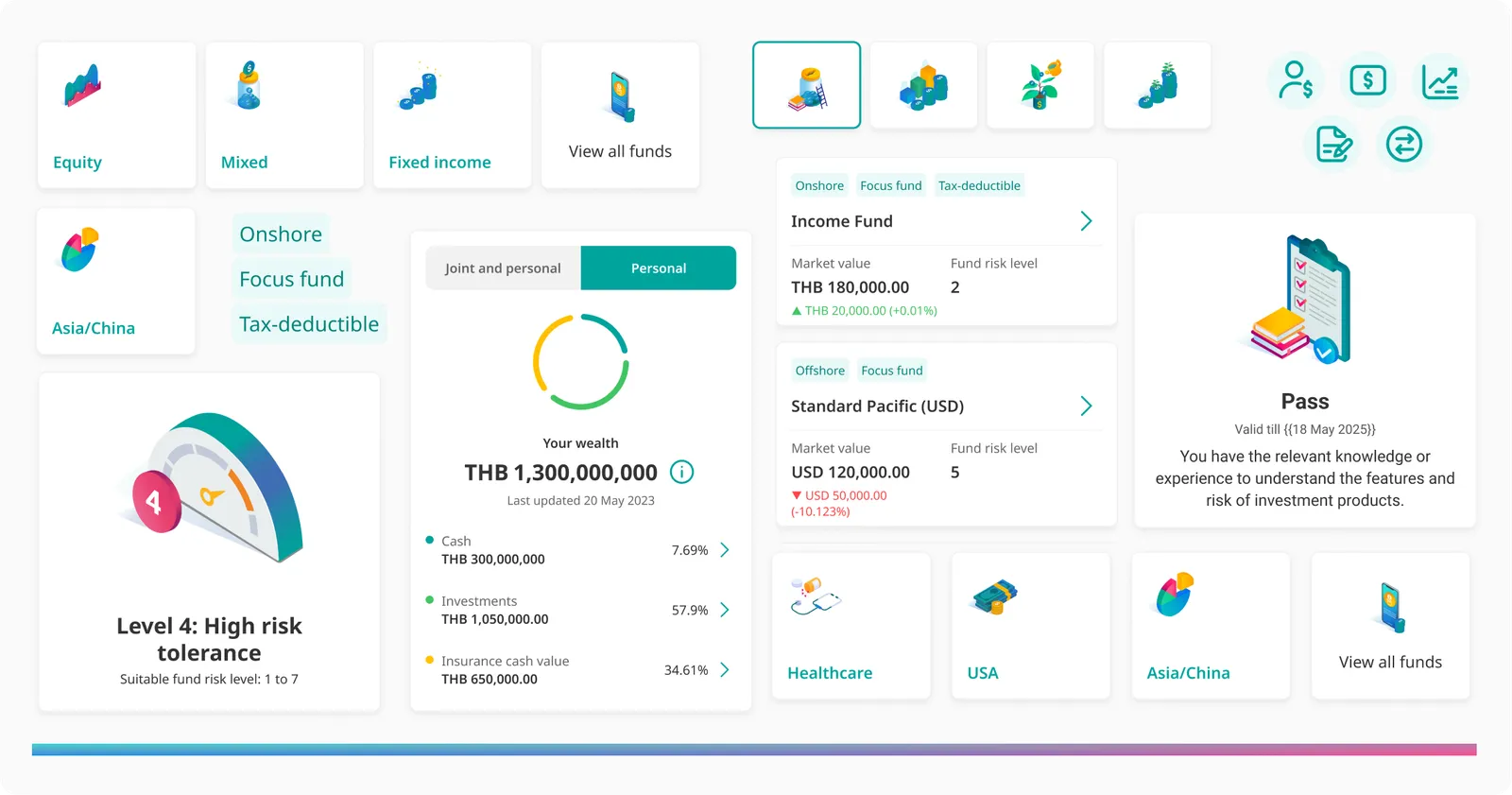
Simple Invest had been designed for the Singapore user, financially literate, digitally confident, already knowing what they wanted, but that had never been named as an assumption. We ran the audit against one question: which parts of this product depend on that user? Navigation, visual hierarchy, and the core patterns were portable. The onboarding assumptions, the financial jargon in the copy, and the expectation that people arrived knowing what to do were not. Market-agnostic components stayed shared; journey-level flows varied where regulation or context required. One product, three implementations, but only after being honest about what one product meant.
Indonesia broke the screen and the seam
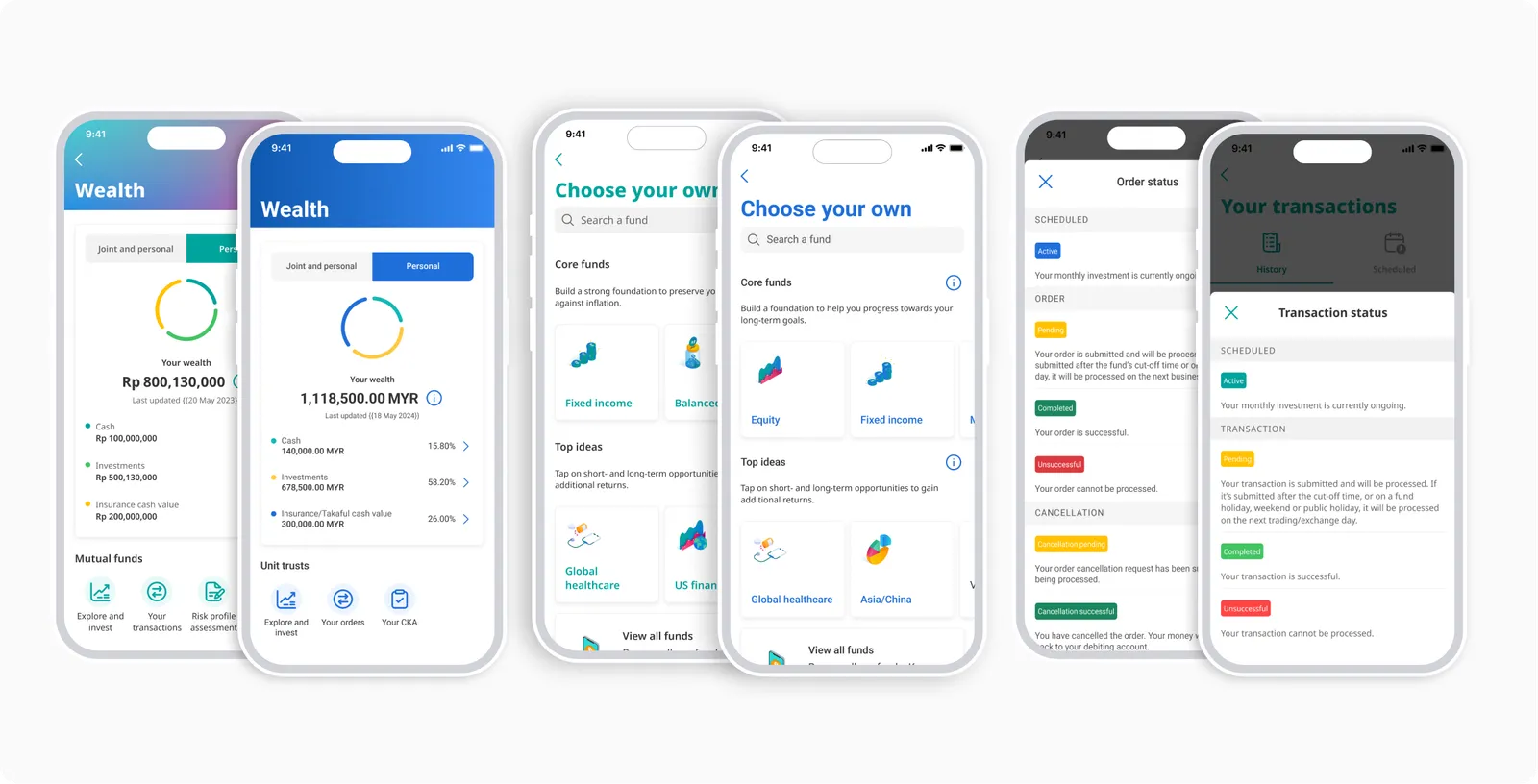
The visible problem came first: Rupiah values run fourteen to sixteen digits, and the UI was built around short Singapore-dollar amounts. Numbers overflowed and alignment broke. The fix was dynamic formatting, abbreviating large values and surfacing B for billions so the hierarchy held at any digit count. The second problem was underneath it. Part of the Indonesia journey routed through an existing bank module we had no design control over, and in testing users hit that hand-off and thought the app had crashed, dropped into a different interface with no warning. We couldn't redesign the module, so we designed the seam, a dedicated transition that prepared users for the change instead of letting it ambush them.
Thailand's drop-off wasn't length, it was language
Thailand had a regulatory suitability questionnaire we couldn't shorten, every question mandated, and longer than Singapore's. The easy assumption was that length caused the drop-off. But it wasn't spread across the form, it concentrated on questions using regulatory terminology retail investors didn't recognise. The questionnaire wasn't too long; it was written for someone who already knew what the words meant. We couldn't remove a question, so we rewrote how each was framed, plain language with the legal meaning preserved. Drop-off improved without touching a single requirement.
Simple Invest launched across all three markets on a shared component foundation. The visual language stayed consistent; the flows varied where they had to. Indonesia showed the assumptions in scale and formatting, Thailand in language, but the pattern underneath was the same: a product built around one kind of user, adapted only once we were honest about it.
What the next market inherits is not just the components, but the habit of auditing assumptions before porting, and aligning legal early, because regulation reshapes layout, not just copy.
- Lead UIUX DesignerEnd-to-end design across four markets
- Stakeholder managementCross-regional alignment across product, engineering, and legal